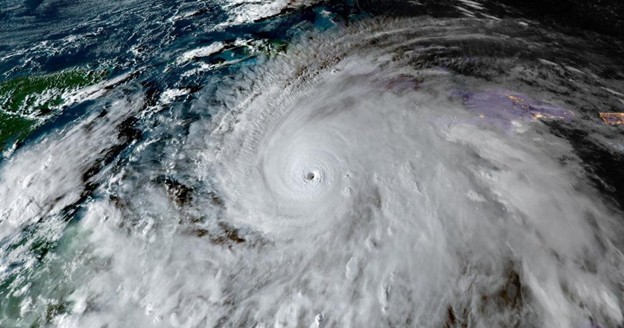
Hurricanes: Nature’s Fury
The sky can turn without warning. One moment it’s a gentle blue canvas, the next it’s swirling with dark, restless energy. Hurricanes are nature’s most dramatic expression of power. They are massive storms born from warm oceans, driven by fierce winds, and capable of demolishing entire cities in a matter of hours. These giants remind us how small we are in the face of Earth’s raw forces. In this post, we’ll explore how hurricanes form, what fuels their strength, and why understanding their behavior is essential as our climate continues to change.
What are Hurricanes?
A hurricane is an intense tropical cyclone that forms over warm ocean waters, characterized by a low-pressure center, thunderstorms, and sustained winds of at least 74 mph. Hurricanes are called typhoons in the northwestern Pacific Ocean and cyclones in the South Pacific and Indian Ocean. These are all the same type of storm, a tropical cyclone, with the name varying depending on the geographical location.
Formation and Parts- Warm Ocean Waters: Hurricanes need warm ocean water (at least 80°F or 27°C) as their energy source. The warm water evaporates, saturating the air above it.
- Rising Air: The warm, moist air is less dense than the surrounding air and rises, creating an area of low pressure near the ocean surface.
- Condensation and Heat Release: As the warm air rises, it cools and the water vapor condenses into liquid water droplets, forming clouds and thunderstorms. This condensation releases heat, further warming the surrounding air and fueling the storm's upward motion.
- Spinning Winds: The rising air creates a vacuum, drawing in more air from the surrounding areas. The Earth's rotation, through the Coriolis effect, causes this incoming air to spin, creating a cyclonic circulation around the low-pressure center.
- Intensification: As the storm moves over warm ocean waters, it continues to gather heat and moisture, leading to intensification. If wind speeds reach 74 mph (119 km/h), the storm is classified as a hurricane.
- Weakening: When a hurricane moves over land or cooler waters, it loses its source of warm, moist air and begins to dissipate.
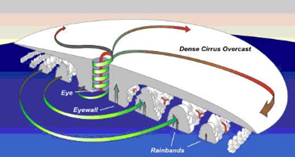
A hurricane has three main parts: the eye, the eyewall, and the rainbands. The eye is the calm, clear center, while the eyewall is the ring of intense thunderstorms with the strongest winds that surrounds the eye. The rainbands are the large, spiraling bands of clouds and thunderstorms that extend outward from the eyewall.
Impacts
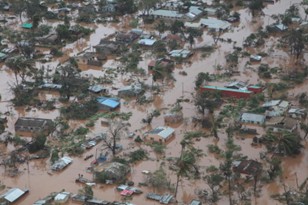
When a hurricane approaches land, tremendous damage can occur to coastal cities and towns. Hurricanes impact the natural environments along a coast, too. Huge amounts of beach sand are moved from place to place. Even large boulders can be carried in the powerful surge of ocean water. High winds can topple trees and low-lying areas are often flooded. The amount of damage depends on the strength of a storm and what it hits.
After a hurricane hits a coastal area, it can travel inland. At this point, the storm has typically weakened, but it can still cause damage. Torrential rains from the storm can cause rivers to flood their banks and mudslides to form. Around the world, about 10,000 people die each year in hurricanes and tropical storms. While hurricanes produce intense winds, big waves, and even tornadoes, floodwaters are their most dangerous aspect.
Most Prominent Hurricanes
Around 45–50 hurricanes form each year, but there are some that have hit world records:
- Most Expensive: Hurricane Katrina in 2005 was the most expensive hurricane, with an estimated cost of $125 billion in damages.
- Deadliest: The Bhola Cyclone in Bangladesh resulted in the most devastation, causing around 300,000 to 500,000 deaths.
- Longest-Lasting: The longest cyclone was Cyclone Freddy in Malawi (2023), which had a duration of 36 days.
- Highest Wind Speeds: Hurricane Patricia (2015) set a record wind speed of 215 mi/hr (346 km/hr).
- Most Rainfall: Typhoon Morakot in Taiwan (2009) had the highest recorded amount of rain in one location, 2,327 mm (91.6 in).
Hurricane intensity is increasing over time due to warmer ocean temperatures fueled by climate change, causing storms to strengthen faster and become more powerful.
ConclusionHurricanes reveal truths about our planet that calm days never will. They show how heat, moisture, and motion can collide to create something terrifying: an engine of wind and water built by the Earth. Their paths carve scars across coastlines, yet they also expose the hidden forces that quietly shape our world every day.
Learning how these storms are born, how they move, and how they fade gives us more than preparedness; it gives us perspective. So the next time you track a storm spiraling across a weather map, take a moment to understand the scale of what you’re witnessing. A hurricane is not just a storm, it is a moment when Earth reveals its raw, unfiltered power. Because hurricanes are more than tempests on the horizon, they represent Nature’s Fury.