
The coastline is a place of constant motion. Waves advance and retreat, tides rise and fall, and the boundary between land and sea is continually reshaped. To live and work along this ever-changing edge, engineers have developed structures that quietly manage the forces of the ocean. Breakwaters, seawalls, and other coastal defenses are designed to respond to waves, currents, and sediment movement. These structures do more than protect infrastructure; they influence how coastlines evolve over time. In this blog, we'll take a closer look at coastal engineering structures, their role in marine engineering, and why they are essential in safeguarding our shores.
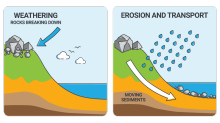
Erosion: Erosion is the natural process where wind, water, ice, or gravity wears away and transports soil, rock, and dissolved materials from one location on Earth's surface to another, shaping landscapes over time.
Sediment Deposition: Sediment deposition is the natural process where particles like sand, silt, and organic matter, transported by water, wind, or ice, settle and accumulate in a new location, often when the transporting force loses energy.
Uplift and Subsidence: Coastal uplift is the upward movement of land, while subsidence is the sinking of land, both caused by tectonic forces, sediment loading, or human activities like groundwater withdrawal, significantly altering relative sea level and increasing flood risk in subsiding areas.
Sea Level Rise: Coastal sea level rise is the increasing height of ocean water relative to land, mainly caused by global warming melting ice sheets/glaciers and warming ocean water expanding, leading to more coastal flooding, erosion, and threats to infrastructure and habitats, with significant impacts expected for densely populated coastal areas.
Types of StructuresCoastal engineering structures essentially slow down or redirect erosion and deposition, along with shaping shorelines to combat sea level rise.
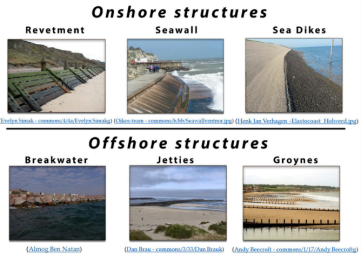
Seawalls: Built parallel to the shore to protect against wave action and prevent erosion.
Groynes: Structures built perpendicular to the shore to trap longshore drift (sand movement) and build up a larger beach.
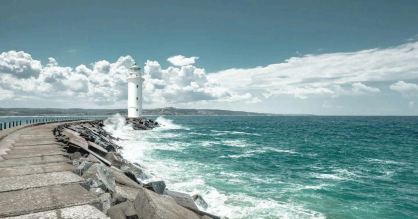
Breakwaters: Built offshore to block waves and reduce wave energy before they reach the coast.
Revetments: Sloped structures built along the coast to absorb wave energy and prevent erosion.
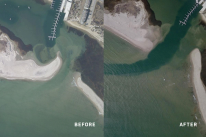
Jetties: Built in pairs on either side of a river mouth or inlet to keep it open and prevent it from shifting.
Soft Coastal EngineeringBeach Nourishment: Adding sand and shingle widens the beach to slow waves and prevent erosion but requires costly maintenance and material sourcing.
Beach Stabilization: Planting dead trees stabilizes and widens beaches to reduce erosion.
Dune Regeneration: Creating or restoring dunes acts as a barrier to absorb wave energy and reduce erosion.
Afforestation of Coastal Dunes: Planting trees stabilizes dunes and reduces erosion.
Mangrove Preservation & Planting: Mangrove roots stabilize shorelines and dissipate wave energy, but non-native mangroves can become invasive.
Coral Reef Preservation & Enhancement: Protecting and building reefs reduces wave impact and erosion.
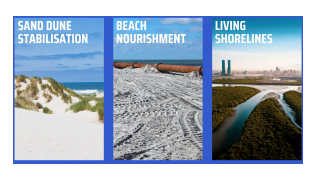
Positive Impacts: Coastal engineering provides major positive impacts by protecting lives and property from storms, tsunamis, and erosion through defenses like seawalls and nature-based solutions (living shorelines), while also boosting economies by maintaining ports and creating recreational areas. Soft engineering also creates biodiversity and restores coastlines, helping the planet.
Negative Impacts: Coastal engineering, especially hard structures like sea walls, negatively impacts Earth by disrupting natural sediment flow, causing erosion elsewhere (downdrift), destroying vital habitats (marshes, reefs, wetlands), increasing pollution during construction, altering water quality, and diminishing natural coastal resilience, leading to habitat loss and greater vulnerability to storms despite short-term protection.
Coastal engineering structures serve as protectors of the shoreline, guiding the interaction between land and sea. Through seawalls, breakwaters, and other defenses, engineers work to reduce erosion and protect coastal communities while shaping how coastlines change over time. Although these structures offer clear benefits, they also introduce environmental trade-offs that must be carefully considered. As coastal challenges grow, thoughtful and balanced coastal engineering will remain essential to sustaining our shores.
